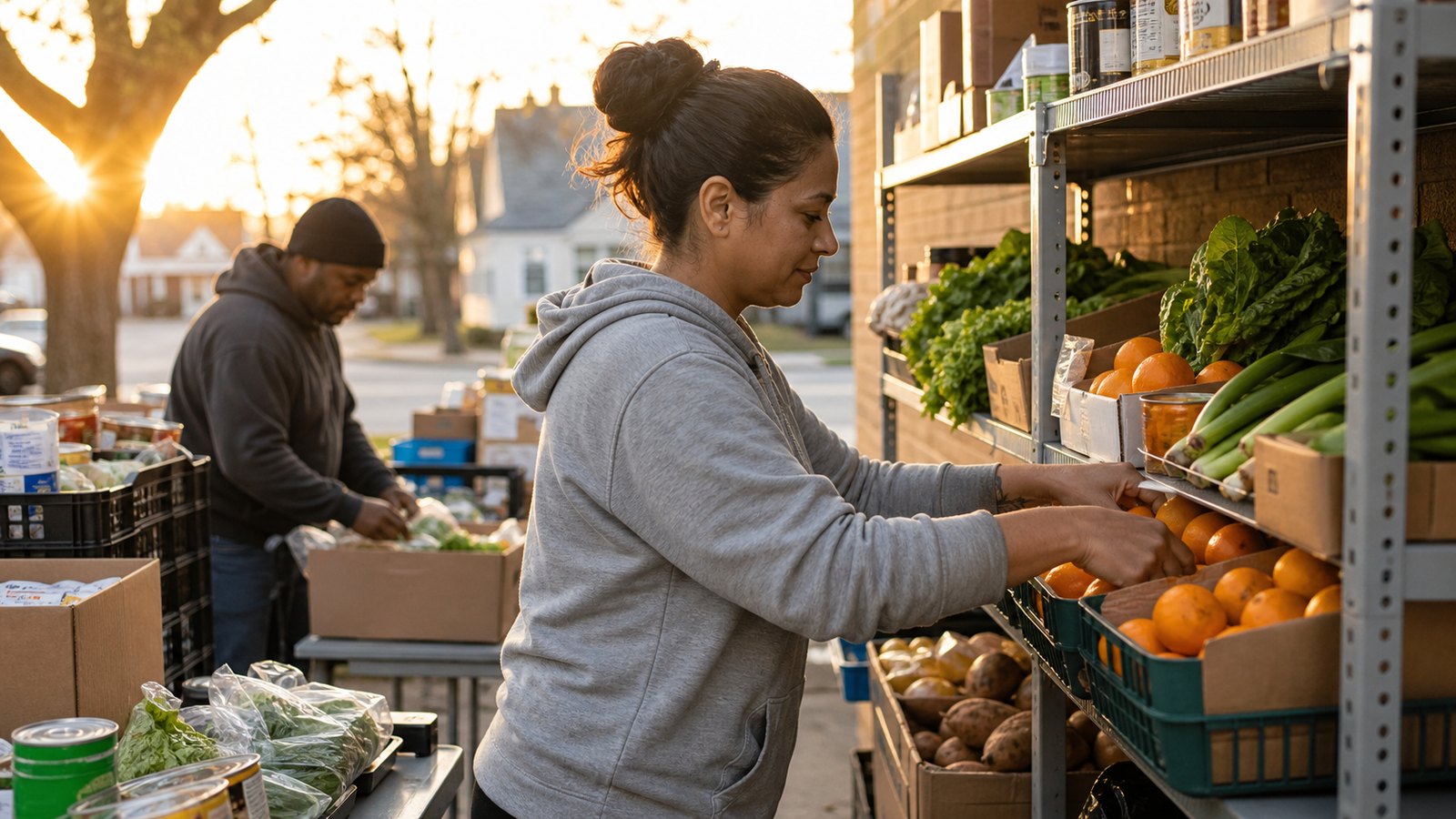
A neighborhood food shelf can look simple: a cabinet, several baskets, and a sign inviting people to take what they need. Behind that simplicity is a routine of sorting, cleaning, restocking, and checking what the neighborhood actually uses.
Consistency matters more than one large donation
Volunteers often visit on a schedule so the shelf remains reliable. They remove damaged goods, organize common items, and make space for new supplies. Small recurring donations can be easier to manage than an unexpected pile.
Dignity shapes the design
The strongest programs reduce unnecessary barriers. Clear organization and accessible placement allow visitors to choose without explaining personal circumstances to a camera or crowd.
- Donate unopened items within their dates.
- Follow the shelf’s posted local guidelines.
- Include useful staples, not only leftovers.
- Never photograph visitors without permission.
Local knowledge prevents waste
Organizers learn which package sizes fit the shelf, which foods can handle the weather, and which personal-care items are requested. That feedback helps supporters contribute more thoughtfully.
Share the model, not a person’s hardship
A responsible social post can highlight volunteer routines, supply lists, and ways to help without identifying people who use the shelf. The most valuable story is often the system of neighbors supporting neighbors.
Quiet projects rarely produce dramatic headlines, but their reliability is exactly what makes them powerful. They turn many small decisions into a resource the community can trust.
- Look beyond the first reaction and notice the choices that shape the moment.
- Context makes a memorable story more useful, accurate, and respectful.
- The best stories reward attention instead of merely demanding it.