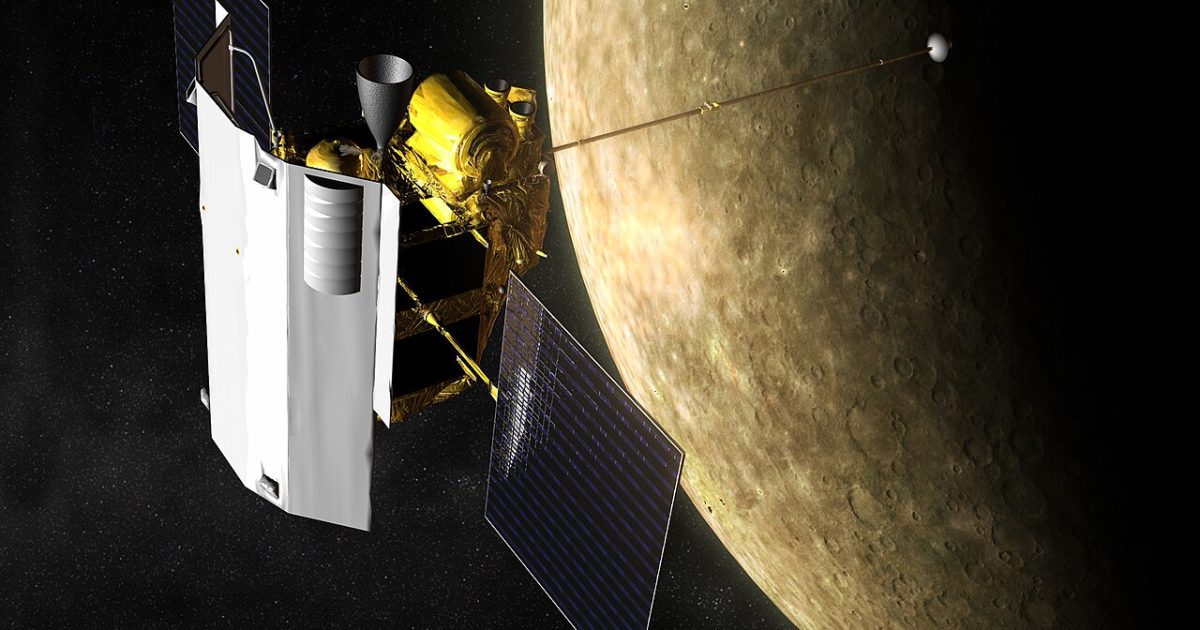
For decades, astronomers viewed Mercury as a quiet, geologically dead world—a sun-scorched cratered sphere that had long since finished changing. However, groundbreaking planetary research has completely upended that narrative. New scientific findings reveal that Mercury is not only actively shrinking, but it is doing so at a pace significantly faster than scientists previously estimated.
Unlocking Mercury’s Shrinking Scars
As Mercury’s immense iron core continues to cool and solidify, the planet’s volume decreases, causing its rocky crust to buckle, crack, and push upward. These geological adjustments form massive cliff-like landforms known as lobate scarps. Detailed analysis of high-resolution orbital imagery shows these fault systems are remarkably young, proving the planet’s tectonic contraction is an ongoing, dynamic process.
- Mercury’s radius has shrunk by miles over its lifetime.
- New fault scarps indicate tectonic activity happened within the last few million years.
- The planet’s cooling core acts as the primary engine for this global shrinkage.
“Mercury is shrinking right out from under its own craters, rewriting our textbooks on how rocky planets age and cool.”
What This Means for Planetary Science
This accelerated contraction forces astrophysicists to rethink thermal evolution models for terrestrial planets. If Mercury—the smallest rocky planet—is still actively wrinkling and shrinking, it opens up critical questions about how similar processes might affect exoplanets and other bodies in our solar system, such as Mars and the Moon. As missions like BepiColombo make their way toward the innermost planet, researchers are eager to uncover even more secrets hidden beneath Mercury’s dusty, sun-baked surface.
Mercury is shrinking because its massive iron core is slowly cooling and contracting, causing the rocky outer crust to buckle and fold.
No, Mercury is located millions of miles away from Earth, and its internal cooling and contraction have zero impact on our planet or its orbit.
Scientists discovered young fault scarps and cliff formations using high-resolution orbital imagery, proving that the crust has been shifting recently in geological terms.
💡 Frequently Asked Questions
❓ Why is Mercury shrinking?
❓ Does this shrinking process pose any danger to Earth?
❓ How do scientists know the planet is shrinking?